The 2026 Action Photographer’s Guide to Freezing Motion: The Exact Shutter Speeds That Never Miss
Discover the exact 2026 shutter speeds to freeze motion in action photography—never miss a shot with this pro guide to sharp, crisp results.
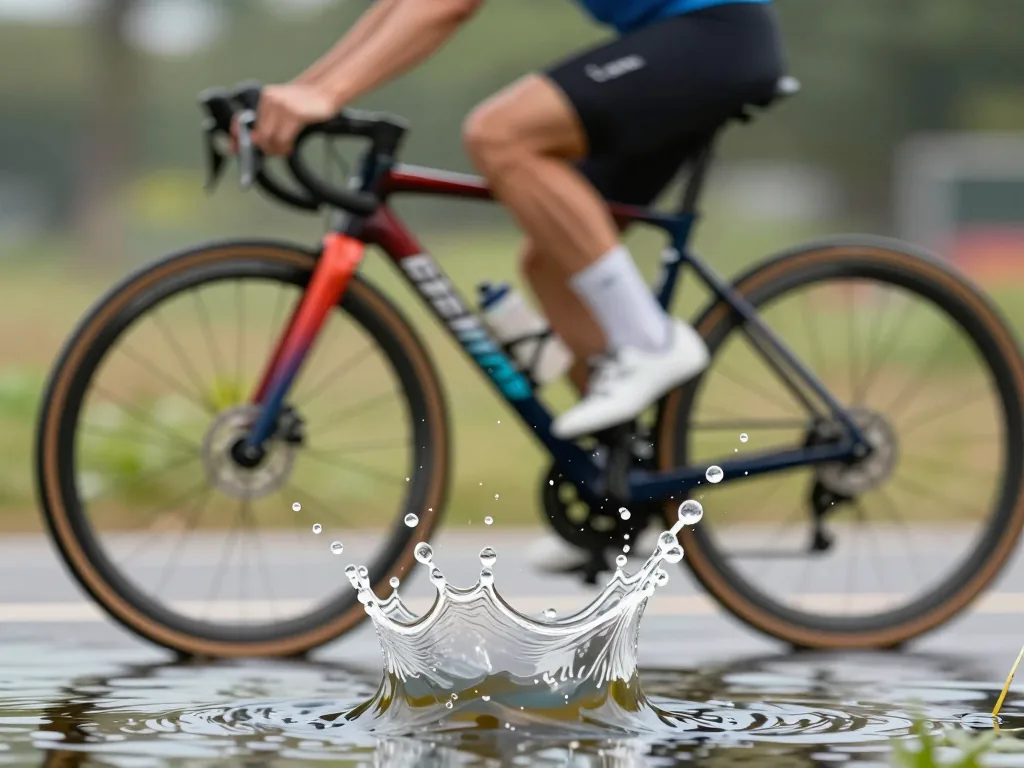
In the split second a motocross rider launches off a jump, or a sprinter explodes from the blocks, shutter speed is all that stands between a razor-sharp masterpiece and a blurry miss. Mirrorless autofocus and in-body stabilization improve yearly, yet many shooters still cling to outdated rules, guessing at the track or pitch. This guide cuts through the noise with field-tested speeds for 2026’s fastest sports—1/1000s for panning cyclists, 1/8000s for frozen bird wings—so you stop chimping and nail the decisive moment. Shooting a local 5K or a professional rally? You’ll get a cheat-sheet of speeds that work, plus the why behind each number, letting you adapt confidently to any light or lens.
Understanding the Core Rule of Thumb for Action
The classic starting point for freezing most action is 1/1000s, but this is only a baseline. For truly fast subjects—a peregrine falcon stooping at 200 mph, a Formula 1 car hurtling down a straight, or a sprinter exploding out of the blocks—you will need to push to 1/2000s or even 1/4000s. The goal is not just to stop the visible blur; it is to make the shutter open and close so quickly that the subject’s movement across the sensor is less than one pixel. When you achieve that, the image renders with near-surgical crispness, and you can crop aggressively without revealing any motion artifacts.
Why 1/1000s Is Not Always Enough
At 1/1000s, a fast-moving subject can still shift several pixels on a high-resolution sensor, creating visible softness that is often mistaken for a focus miss. The perceived sharpness of an image is directly tied to how many pixels the subject moves during the exposure. On a 45-megapixel body, a cyclist traveling at 30 mph moves roughly 13mm in one-thousandth of a second. Magnified through a 400mm lens, that translates into a smear of 3–4 pixels across the frame. The human eye catches this as a subtle lack of tack-sharpness, especially when viewing at 100% zoom or printing large. Therefore, you must treat 1/1000s as a floor, not a target. It works for slow, predictable motion like a jogger or a horse trotting, but it fails for explosive, erratic movement. In 2026, with sensors capable of 60+ megapixels, the margin for error is thinner than ever.
The Relationship Between Focal Length and Subject Speed
A longer focal length magnifies both the subject and its motion across the frame. If you are shooting with a telephoto lens—say, a 600mm f/4—the same subject moving at the same speed will require a faster shutter speed than if you were using a wide-angle lens at 24mm. This is because angular velocity increases with magnification: the subject appears to traverse the sensor more quickly. Double the focal length, and you may need to double your shutter speed to maintain the same level of frozen motion. For example, a surfer carving along a wave face at 1/1000s on a 70-200mm lens may look sharp, but switch to a 400mm and you will need 1/2000s; step up to an 800mm and you are looking at 1/4000s to get the identical crisp result. This rule holds regardless of image stabilization—IBIS and lens-based VR reduce camera shake, not subject motion. So check your focal length first, then set your shutter speed accordingly, and only then adjust aperture and ISO to match the light.
How Subject Direction Affects Your Shutter Speed
The single biggest mistake in action photography is treating every moving subject the same. Your shutter speed should be dictated not just by how fast something is moving, but by the direction it travels relative to your sensor plane. This is the difference between a sharp keeper and a frustrating blur, and it’s entirely predictable.
Perpendicular Motion: The Fastest Case
When a subject crosses your frame left-to-right or right-to-left, it’s covering the maximum number of pixels in the shortest possible time. Think of a sports car passing you at 100 mph on a straight road. Its image is sweeping across your sensor at an alarming rate, and even a tiny fraction of a second of movement translates into a long streak of blur. For this scenario, 1/2000s is the absolute minimum you should consider, and 1/4000s is your safer, default choice. Panning—smoothly tracking the car with your lens—can help reduce the relative motion, but it’s a crutch, not a cure. The shutter speed is still doing the heavy lifting. If you’re shooting a motorcycle on a racetrack or a cyclist sprinting past you, do not drop below 1/2000s unless you’re deliberately chasing a motion-blurred background. At these speeds, your camera’s autofocus also needs to be in continuous mode (AF-C) with a wide-area or zone pattern to keep the subject locked as it crosses the frame.
Diagonal and Head-On Motion: More Forgiving
Now, flip the scenario. A runner is sprinting directly toward you. Their image is growing in size, but it’s not sliding across the sensor horizontally. The relative movement of their features is much slower because the distance between you and them is changing gradually, not rapidly. Here, you can often freeze the action at a surprisingly modest 1/500s. The same logic applies to a car coming straight down a drag strip—you can get away with 1/1000s and still nail a sharp front grille and helmet. Diagonal motion, where the subject is approaching you at a 45-degree angle, sits squarely in between. Start at 1/1000s and review your test shots on the rear screen. Zoom in to 100% and check the edges of limbs and wheels. If there’s any hint of softness, bump up to 1/1600s or 1/2000s. The golden rule is simple: when you’re unsure, err on the side of faster. A slightly higher ISO is a cheap price to pay for a tack-sharp face. Your camera’s high-ISO performance in 2026 is more than capable of handling the trade-off, so never hesitate to push the speed.
High Resolution Sensors Demand Faster Speeds
The biggest shift in action photography over the last three years isn’t a new lens or autofocus trick—it’s the sensor inside your camera. By 2026, 45MP bodies are entry-level pro tools, while 61MP full-frame sensors are standard on flagships. That resolution comes with a hidden cost: it reveals motion blur that older 12MP or 24MP sensors would have quietly smoothed away. The shutter speed you trusted on a 24MP body—say, 1/1000s for a sprinting cyclist—will show visible edge softness on a 61MP sensor the instant you zoom to 100%. Pixels are so small that even a fraction of a millimeter of subject movement during exposure smears across multiple photosite boundaries. To keep the same perceived sharpness, you need to boost your shutter speed by roughly 1.5 to 2 stops when moving to a higher-resolution camera. This isn’t a stylistic choice; it’s a mathematical outcome of pixel pitch.
Pixel Density and the Blur Threshold
Here’s the simple rule: more pixels mean less acceptable movement before blur appears. A 45MP sensor demands a shutter speed about 1.4 times faster than a 24MP sensor for identical subject speed and framing. On a 61MP sensor, you might need 1/4000s where you once used 1/2000s. This isn’t about camera shake—IBIS and solid technique handle that. It’s about the subject’s own motion across the frame. A bird’s wingtip, a runner’s foot, a car’s tire tread—each travels a measurable distance during your exposure. On a 24MP sensor, that distance might fit within one pixel, invisible. On a 61MP sensor, the same distance spans three pixels, producing a visible smear. The “blur threshold” is the exact shutter speed where the subject’s movement equals one pixel width. Below that, you’re sharp; above it, you’re not.
Practical Testing for Your Specific Camera
Generic rules are a starting point, not the final word. Your camera, lens, and stabilization system create a unique blur profile. Test with your own gear. Set up a repeating motion—a pendulum, a fan with a painted blade, or a friend sprinting past a fixed point. Shoot at increasing speeds: 1/500s, 1/1000s, 1/2000s, 1/4000s. Keep aperture and ISO constant, and mount the camera on a tripod to remove shake. Then zoom to 100% on your monitor. You’ll find the exact threshold where your setup delivers tack-sharp images. For most 45MP bodies, that lands between 1/2000s and 1/3200s for moderate-speed action; for 61MP, expect 1/4000s or faster. This personal calibration beats any generic rule, because it factors in your lens’s resolving power, your sensor’s readout speed, and your own hand-holding stability. Do it once, and you’ll never guess again.
Using Shutter Priority and Manual Mode Effectively
If you’re serious about freezing motion in 2026, stop trusting your camera’s brain to pick the speed. Aperture priority works for landscapes, but in action photography it will betray you the instant light dips behind a cloud. The reliable path is direct control—shutter priority (Tv on Canon, S on Nikon/Sony) or full manual—while letting auto ISO handle exposure math. That’s not a compromise; it’s the standard workflow for anyone shooting sports, wildlife, or motorsports on modern mirrorless bodies.
Setting a Minimum Shutter Speed in Auto ISO
Most cameras from the last three years offer a safety net: a minimum shutter speed inside the auto ISO menu. Dial in 1/2000s as your floor, and the camera juggles aperture and ISO to keep exposure correct without ever dropping below that speed. This is a lifesaver when panning with a subject as the background shifts from shadow to bright pavement. But here’s the catch: if light falls beyond what your lens and ISO ceiling can handle, the camera quietly overrides your minimum and slows down to avoid a black frame. That 1/2000s becomes a suggestion, not a law. Check your settings every few minutes—especially during golden hour or in overcast stadiums—and raise your ISO ceiling manually if you see the speed creep down.
Why Manual Mode Gives You Full Control
For professional work, manual mode with auto ISO is the gold standard. Lock your shutter at 1/2000s, choose your aperture for depth of field—say f/4 to isolate a runner against a busy background—and set auto ISO to float between 100 and 6400. Now the camera has exactly one variable: ISO. Your shutter speed never moves, regardless of light. This is the most reliable way to freeze motion because it strips the camera of any creative decision you didn’t authorize. You get consistent sharpness frame after frame, and you can focus entirely on timing your trigger finger. The only downside: you must monitor ISO constantly to ensure it isn’t climbing into noise territory. If it is, open the aperture or accept the light is too low for 1/2000s. In practice, this mode turns your camera into a precise instrument rather than a guesser—exactly what you need when the decisive moment lasts a tenth of a second.
The Truth About Image Stabilization and Motion Blur
Every year, a new camera body or lens arrives with marketing claims about “5-axis compensation” or “8 stops of stabilization.” And every year, I watch photographers convince themselves that this magic glass can freeze a sprinting athlete or a flapping bird. It cannot. Image stabilization—whether built into the sensor (IBIS) or the lens—is engineered for one job only: to cancel out the tiny, involuntary movements of your hands and body while you hold the camera. It does absolutely nothing to stop a subject moving through your frame. Braced against a wall, hands steady? Stabilization is a welcome helper. But the moment your subject is charging, spinning, or falling, stabilization is irrelevant. The shutter speed is the only thing that dictates whether that motion is a sharp slice of time or a streaky mess. You cannot “stabilize” your way out of a 1/125th-second shot of a running back; you need 1/1000th or faster, period.
Stabilization Only Helps with Camera Shake
When you pan to follow a moving subject, stabilization can be genuinely useful—but only for reducing vertical bounce and micro-jitter that creep in as you swing your lens. It will not, and cannot, freeze the subject’s own forward motion. Pan at 1/250th of a second with a cyclist crossing at 30 mph, and the bike and rider will still blur. Their movement across the sensor is far faster than the tiny hand-shake corrections the stabilizer is designed to handle. Stabilization is a tool for static subjects, slow pans, or handheld video. For high-speed action, it is a comfort feature, not a technical solution. The only true freeze comes from a shutter speed short enough to capture the subject in a single instant—often 1/1000th, 1/2000th, or even 1/4000th, depending on speed and direction.
When Stabilization Can Actually Hurt You
Here is the counterintuitive part: stabilization can actively degrade your action shots. When you pan quickly, the stabilizer’s gyroscopes detect the fast lateral movement and try to “correct” it—but that movement is exactly what you intend. The system fights you, introducing a subtle, floating blur that you would never see with stabilization off. This is why many professional sports and wildlife shooters switch stabilization off entirely when tracking fast subjects. The fix is simple: test your own gear. Shoot a series of panning shots with stabilization on, then off, at the same shutter speeds. On some lenses, the difference is negligible; on others, the sharpness gain from disabling it is dramatic. Know your system before the decisive moment arrives.
Burst Mode and Shutter Speed: Working Together
Burst mode is a powerful ally, but it cannot replace a correctly chosen shutter speed. In 2026, even entry-level mirrorless cameras rattle off 10 to 20 frames per second, while flagship sports bodies push past 30 fps with silent electronic shutters. Yet the physics of motion blur remain unchanged: a burst at 1/500s will yield twenty equally blurry frames if your subject tears across the frame at 30 mph. Shutter speed is the non-negotiable foundation; burst mode merely increases the odds that one frozen frame aligns with the action’s peak. Think of it this way—burst mode solves the when problem, shutter speed the how sharp one. You need both, but only one can save a technically soft image.
The Timing Advantage of High Frames Per Second
At 20 fps, you gain a genuine temporal edge. The gap between frames is roughly 50 milliseconds—often the difference between a basketball player’s fingers on the ball and the ball already launched. At 30 fps or higher, you can reliably catch the apex of a motocross jump or the exact millisecond a skateboard wheel leaves the coping. But here’s the nuance: every frame in that burst must be individually frozen by a fast shutter speed. Shoot at 1/1000s, and each of those 20 frames is a sharp slice of time. Drop to 1/250s, and you’ll have 20 frames of artistic smear. Use burst mode to select the best composition—the most expressive limb position, the most dramatic background—not to compensate for a lazy shutter setting. Frame selection happens after the burst, but optical sharpness must be locked in before you press the button.
Pre-Burst and Electronic Shutter Benefits
The latest 2026 bodies have made pre-burst capture standard on many mid-range and professional models. This mode continuously buffers frames in the background, saving the 0.5 to 1 second of images before you fully depress the shutter. For unpredictable action—a goalkeeper’s dive, a dog catching a frisbee mid-air—this is a game-changer. You no longer need to anticipate the exact moment; you just need to react within a second of it. Pair this with a global or stacked electronic shutter, which reads the sensor in under 1/250s, and rolling shutter distortion vanishes. You can pan across a speeding car or swing your lens to follow a sprinter without bent vertical lines. However, the required shutter speed for freezing motion remains exactly what it was with a mechanical shutter. Pre-burst and electronic shutters expand your capture window and improve image integrity, but they do not alter the fundamental relationship between subject speed, focal length, and the 1/focal-length rule. For most action, that still means 1/1000s as your baseline, 1/2000s for fast team sports, and 1/4000s or higher for motorsports and birds in flight. Burst mode gives you more chances; the shutter speed gives you a sharp chance.
Low Light Action: Raising ISO to Maintain Speed
Indoor sports, night races, wildlife at dusk—these are where most action photographers lose the battle before pressing the shutter. The light drops, and your speed creeps from 1/2000s to 1/1000s, then 1/500s, until sharp frames turn to blur. The fix isn’t lowering standards; it’s raising ISO. By 2026, holding a genuine 1/2000s in a dim arena or under floodlights will routinely demand ISO 3200, 6400, or even 12800. Modern full-frame and APS-C sensors handle these values exceptionally well, but they aren’t magic. Noise will appear, especially in shadows—dark jerseys, a horse’s shaded flank, the black void behind a night sprinter. Accept it as the cost of admission, then manage it intelligently.
The ISO and Noise Trade-Off in 2026
High ISO noise is far less punishing than a decade ago. Sensor design, stacked BSI architectures, and in-camera processing have all improved dramatically. At ISO 12800, you won’t see the heavy, color-speckled mess of old. Instead, fine luminance-based grain slightly reduces detail—feather texture, glove stitching, a helmet visor’s crisp edge. But the trade-off never changes: a slightly noisy, perfectly sharp image always beats a clean but blurry one. Blur is unrecoverable; noise is manageable. So in 2026, the rule is simple: set shutter speed first for the action, then raise ISO wherever it needs to go—even if that number scares you. Auto-ISO can handle this, but set a minimum of 1/2000s and let ISO float freely. Don’t cap it at 6400 out of fear; let it hit 12800 if the light demands.
Using Noise Reduction in Post-Processing
Modern software—Lightroom, Capture One, dedicated AI denoisers—has become remarkably effective at reducing high-ISO noise without destroying detail. The trick is shooting RAW, not JPEG. RAW gives you full latitude for selective noise reduction. In post, use masking or luminance tools to apply strong reduction to the background (often out of focus anyway) while keeping the subject’s edges and texture sharp. This two-step approach lets you push ISO higher without regret. A night motocross race at ISO 10000, for instance, can be cleaned to look like ISO 1600 in the final export—provided the subject’s face and gear stay crisp. The workflow is straightforward: shoot at the necessary speed, worry about noise later, and let software do the heavy lifting. By delivery, no one sees the grain—only the frozen action.
Electronic Shutters and Rolling Shutter Distortion
By 2026, the conversation around rolling shutter has shifted dramatically. A decade ago, photographing a speeding motorcycle or a swinging golf club with an electronic shutter meant risking vertical lines that leaned like a funhouse mirror—the dreaded “jello effect.” Today, that problem is largely a historical footnote. Global shutters, now standard in flagship mirrorless cameras from Sony, Canon, and Nikon, read the entire sensor in a single instant, capturing every pixel simultaneously. Stacked sensors, meanwhile, have become the default in mid-to-high-end bodies, with readout speeds so fast that distortion is visually negligible—even when panning with a sprinting athlete or a bird in burst flight. Both technologies are genuine triumphs.
Global Shutter vs. Stacked Sensor Readout
The distinction matters for your gear choices, not your technique. A global shutter physically eliminates distortion because there is no sequential readout to skew. A stacked sensor, by contrast, still reads lines in sequence, but it does so in roughly 1/250th of a second or faster—fast enough that only the most extreme, pixel-peeping scenarios (like a propeller blade at 1/8000s) reveal any bend. For 99.9% of action work, both are flawless. But here’s the critical point: neither changes what you set on your camera. A global shutter does not freeze a cheetah’s stride any better than a mechanical shutter at the same speed. It only prevents the sensor from warping the image during readout. The actual freezing of the subject’s motion happens entirely during the exposure window—the time the shutter is open to light.
Why Shutter Speed Remains the Same
This is where photographers still get tripped up. The electronic shutter is a capture mechanism, not a motion control. Exposure time is exposure time, whether the light hits a mechanical curtain, a global sensor, or a stacked sensor readout line by line. If you use 1/250s with a global shutter, you will get the same motion blur as with a mechanical shutter at 1/250s. The electronic shutter does not shorten the duration of light collection; it only changes how that collected light is digitized and transferred. So, for freezing a runner’s foot at peak extension, you still need 1/1000s. For a hockey stick slap shot, 1/2000s. For a hummingbird’s wing, 1/4000s or faster. The electronic shutter is your ally against distortion, but it is not a shortcut to a slower shutter speed. Set your speed for the subject, and trust the sensor to keep lines straight.
Fine-Tuning Your Shutter Speed for Specific Subjects
No single shutter speed is universally “correct.” The right one depends entirely on the physics of your subject’s fastest-moving part. While 1/1000s works as a solid baseline for general sports, 2026’s sensors—with dual-gain ISO and stacked readouts—let you push well beyond that without losing dynamic range. Start by isolating the fastest component of your subject, not the subject itself. A peregrine falcon diving at 240 mph can have its body frozen at 1/2000s, but its wingtips cut through the air at nearly triple that speed. To capture individual primary feathers with zero motion blur, you’ll need 1/4000s. That’s non-negotiable for birds, bats, and insects; their wingstroke is a whip-crack, not a smooth glide. For hummingbirds, whose wings beat at 50 cycles per second, go to 1/8000s if you want the stroboscopic shape of the wing disc rather than a soft, translucent smear.
Motorsport shifts the equation because you’re usually panning. A Formula 1 car at 200 mph moving perpendicular to your lens needs 1/2000s to freeze the chassis crisply—but only if your tracking is smooth. The key nuance is the wheels: at 1/2000s, spokes still show a slight rotational streak, which actually helps convey speed. To lock the wheels completely, you’d need 1/4000s, but then you lose the background blur that fuels the image’s kinetic energy. For rally cars sliding through gravel, where the car’s angle shifts constantly, drop to 1/1000s and lean on your panning technique—the car’s forward motion is slower relative to the frame than a straight-line F1 car.
Human athletes present varied speed profiles across joints. A sprinter’s torso moves at roughly 25 mph, but their heel at toe-off whips through 50 mph. Use 1/1600s for a clean full-body freeze. A baseball bat at the moment of contact exceeds 80 mph at the barrel, so 1/3200s is the minimum to avoid a ghosted bat edge. For martial arts kicks, the foot peaks at 60 mph, making 1/2500s your safe zone. Memorize these thresholds, then add one stop of headroom for erratic movement. When unsure, rely on auto-ISO with a minimum shutter speed of 1/4000s; modern stacked sensors handle noise so well that overshooting never hurts, but undershooting always will.