DSLR vs Mirrorless in 2026: The Honest Buyer’s Guide You Need to Read
Stuck choosing between DSLR and mirrorless in 2026? This honest guide breaks down the pros, cons, and future-proof tech to help you decide which camera to buy.
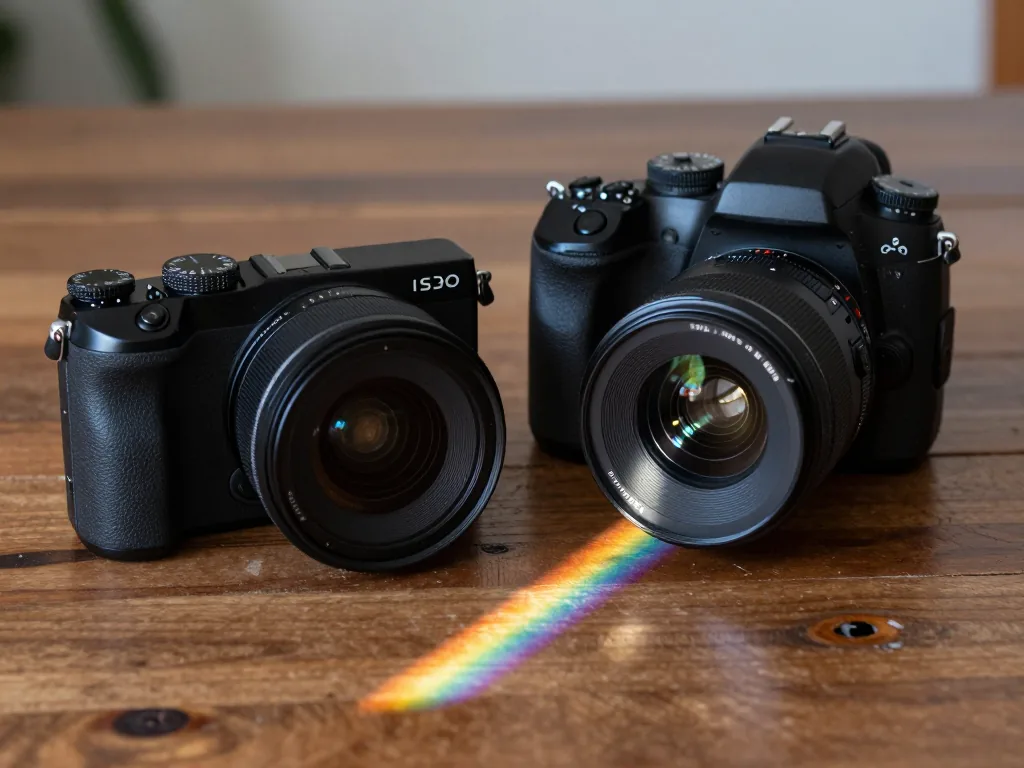
The debate between DSLR and mirrorless cameras has finally settled into something far more practical than the heated arguments of a few years ago, yet the choice remains as crucial as ever. Both systems deliver incredible image quality in 2026, but the landscape has shifted dramatically: mirrorless technology is now fully matured, while DSLRs occupy a refined, budget-friendly niche. This honest guide cuts through the marketing noise, offering a clear, real-world breakdown of which system fits your shooting style, your wallet, and your future needs. Whether you’re a first-time buyer or an experienced photographer considering a switch, you’ll leave with the confidence to make the right purchase today.
The State of the Camera Market in 2026
What Happened to DSLRs
The short answer is that DSLRs, as a category, have effectively reached their end-of-life. By 2026, every major manufacturer—Canon, Nikon, Pentax, and the rest—has either formally discontinued their DSLR lines or silently stopped developing new bodies. The only new DSLRs you can still find on shelves are entry-level and mid-range models from a few brands, primarily aimed at budget-conscious beginners or educational institutions with existing fleets. These are not bad cameras, but they are frozen in time. The lens ecosystems for DSLR mounts—Canon EF, Nikon F, Pentax K—are no longer expanding. No new lenses are being designed, no firmware updates are addressing modern autofocus needs, and third-party lens makers are shifting production entirely to mirrorless mounts. If you buy a DSLR today, you are locking yourself into a system that will only offer you used or repackaged glass going forward. That is a genuine limitation for anyone planning to grow their kit over the next five years.
Why Mirrorless Took Over
Mirrorless cameras are now the sole focus of innovation across the industry. The electronic viewfinders in 2026 models have near-zero lag—they refresh so quickly that the experience feels indistinguishable from an optical viewfinder, except you also get real-time exposure preview, focus peaking, and histogram overlays. Autofocus systems have been transformed by dedicated AI processors: subject detection now reliably tracks birds in flight, racing cars, and even individual eyes behind sunglasses during fast-paced events. Video specs have become a central selling point, with most mid-range mirrorless bodies offering 6K or 8K recording, internal ProRes, and advanced stabilization that rivals dedicated gimbals. Every major camera company—Sony, Canon, Nikon, Fujifilm, Panasonic, OM System—is pouring its R&D budget into mirrorless. That means regular firmware updates that add features (like new subject recognition modes), a steady stream of new lenses (from ultra-wide primes to compact telephoto zooms), and robust third-party support from Sigma, Tamron, and Viltrox. If you want a camera that will still feel current in 2030, mirrorless is the only rational choice.
Optical Viewfinder vs Electronic Viewfinder
The viewfinder debate still divides DSLR and mirrorless cameras in 2026, and it directly shapes your shooting experience. Understanding the difference matters—it affects your workflow and how quickly you learn from mistakes in the field.
How an OVF Works in a DSLR
A DSLR’s optical viewfinder is a marvel of mechanical engineering. Light enters the lens, hits a mirror, bounces into a pentaprism, then reaches your eye. You see a direct, unprocessed stream of light—exactly what the lens sees. There’s zero electronic latency, no pixel grid, and no battery drain from the viewfinder itself. For photographers shooting fast sports or wildlife, this pure, lag-free view is irreplaceable. You never worry about blackout during a burst.
But the OVF has a blind spot: you cannot preview your final image. You see the scene, but not how your exposure, white balance, or depth of field will affect it. You must shoot, chimp the LCD, adjust, and reshoot. This slower feedback loop frustrates beginners learning to connect settings with results. An OVF also struggles in low light, where the scene becomes dim and hard to compose.
The EVF Advantage in 2026
Mirrorless electronic viewfinders have matured dramatically. In 2026, high-end EVFs offer over 5.76 million dots, 120Hz refresh rates, and near-zero blackout. Latency that plagued early EVFs is now negligible. What you gain is real-time simulation of your final image. You see how aperture affects depth of field, how shutter speed freezes or blurs motion, and how white balance tints the scene—all before you press the shutter.
This preview is a powerful teaching tool. Overlays like live histograms, focus peaking, and zebra stripes for overexposure are standard. For a beginner in 2026, an EVF makes learning intuitive: adjust a dial, and the viewfinder instantly shows the result. For professionals, nailing exposure and focus in-camera saves post-production time. The trade-off is battery life—an EVF drains power constantly—but modern mirrorless bodies typically offer 400 to 800 shots per charge, and external grips remain viable for long shoots.
The bottom line: If you value a pure, lag-free optical window and shoot action where battery life is critical, an OVF remains valid. If you want to see your final image before you take it, learn faster, and leverage modern focusing aids, an EVF is the superior choice in 2026.
Autofocus Performance for Moving Subjects
When you’re chasing a sprinting child, a flying bird, or a rally car sliding through a corner, autofocus speed and reliability can make or break a shot. In 2026, the gap between DSLR and mirrorless cameras in this arena is wider than ever—and it’s not just about speed, but about how the system thinks.
DSLR Phase-Detect Autofocus
Traditional DSLRs rely on a dedicated phase-detect autofocus (PDAF) sensor, separate from the main imaging sensor. In bright, contrasty conditions, this system is remarkably fast—often locking focus in a fraction of a second. However, that dedicated sensor has a major Achilles’ heel: it struggles in low light. When the sun drops or you’re shooting indoors, the phase-detect module loses sensitivity, causing hunting and missed shots. More critically, the autofocus points in most DSLRs are clustered near the center of the frame. This means if your subject is off-center—say, a soccer player cutting across the left third of the frame—you either have to recompose (risking lost focus) or rely on less accurate cross-type points on the periphery. For erratic motion, like a dog zigzagging through tall grass, DSLR tracking can fall behind because the system has limited spatial awareness outside the central cluster. While high-end pro DSLRs from brands like Canon and Nikon still offer impressive burst rates (up to 14 fps), the autofocus coverage rarely exceeds 30–40% of the frame, making it a frustrating tool for unpredictable action.
Mirrorless AI-Based Autofocus
In 2026, mirrorless cameras have redefined moving-subject tracking. Instead of a separate sensor, they use on-sensor phase detection that covers 90–100% of the frame. But the real game-changer is AI-based subject recognition. Modern mirrorless bodies—from Sony’s A1 II to Canon’s R5 Mark II and Nikon’s Z8—employ deep-learning algorithms trained on millions of images to identify not just faces, but eyes, bodies, animals, birds, vehicles, and even specific types of aircraft or train. The camera doesn’t just follow contrast; it understands what it’s looking at. If you’re photographing a runner, the camera will lock onto their eye and hold it even as they turn their head. For wildlife, it can track a bird’s eye through branches. In low light, on-sensor PDAF is inherently more sensitive because it uses the same pixels that capture the image, so you get reliable focus down to -6 EV or darker—far beyond what any DSLR can manage. The coverage means you can place your subject anywhere in the frame and trust the camera to stay locked. Burst rates now hit 30 fps (with no blackout) on many mirrorless bodies, and the AI predicts motion vectors, so even erratic subjects are tracked smoothly.
Bottom line: For moving subjects in 2026, mirrorless is not just better—it’s a fundamentally different technology. A capable mirrorless body for sports and wildlife starts at around €1,800 to €3,500 (body only), while a used pro DSLR with decent tracking might run from €800 to €1,500. But the mirrorless investment pays off in keeper rates that are 2–3x higher for fast action.
Image Stabilization: In-Body vs Lens-Based
Ever tried shooting a sharp handheld photo in fading evening light, or capturing a smooth walking shot for a vlog? Then you know camera shake is the silent killer of quality. In 2026, how your camera handles that shake is one of the most practical differences between DSLRs and mirrorless systems—and it directly impacts your wallet and lens collection.
DSLR Reliance on Lens Stabilization
Here’s the hard truth about most DSLRs: they lack in-body image stabilization (IBIS). The body can’t compensate for shaky hands. Instead, you’re forced to buy lenses with built-in optical stabilization—often labeled VR, IS, or OS. These lenses are effective: a good stabilized telephoto gives you three to four stops of shutter speed advantage. But that comes at a cost. A stabilized 24-70mm f/2.8 lens for a DSLR typically runs €1,100 to €1,800. And here’s the catch: buy a non-stabilized prime (like a fast 50mm f/1.8) or an older used lens, and you get zero shake reduction. Your lens choice is heavily restricted by stabilization availability, and upgrading often means spending significantly more per optic. For video shooters, this is especially painful—DSLR video without stabilization is notoriously jittery unless you invest in a gimbal.
Mirrorless IBIS as Standard
Since 2020, the mirrorless world has taken a different path. By 2026, in-body image stabilization (IBIS) is standard on nearly every new mirrorless camera, from entry-level APS-C models to full-frame flagships. This changes everything. The sensor itself shifts to counteract your movement, stabilizing any lens you attach. That inexpensive vintage 35mm lens from a flea market? Now stabilized. That ultra-wide-angle lens that never had built-in IS? Smooth as butter. You get sharper handheld shots in low light—typically gaining four to five stops of stability—and professional-looking video footage without needing a gimbal. The cost saving is real: buy a mirrorless body for around €1,200 to €2,500 that includes IBIS, then pair it with cheaper, non-stabilized lenses, saving hundreds of euros per lens. The trade-off? IBIS can sometimes produce a slight “floating” effect in the viewfinder during panning, but modern 2026 algorithms have largely solved this. For the vast majority of shooters, IBIS is the single biggest advantage mirrorless holds over DSLR in 2026.
Battery Life and Real-World Usage
Battery life can make or break a shoot when you’re in the field. In 2026, the gap between DSLR and mirrorless cameras remains significant, though the nature of the problem has shifted. Let’s break it down by system.
DSLR Longevity
DSLRs still hold a clear advantage for all-day shooting. A typical model delivers 600 to 1,200 shots per charge—sometimes more with a high-capacity battery. The reason is simple: the optical viewfinder uses zero power. You compose, focus, and shoot without draining the battery just to see the scene. That makes DSLRs ideal for events like weddings, wildlife safaris, or long travel days where you might not access a power outlet for 12-plus hours. Shooting a full-day conference or hiking remote terrain? A single DSLR battery can easily last the entire session. Many photographers still rely on this predictability—you know exactly what you have, and you rarely think about charging mid-job.
Mirrorless Power Management
Mirrorless cameras average 300 to 500 shots per charge in 2026. The electronic viewfinder and image sensor constantly draw power, even when you’re just composing. That said, the situation has improved dramatically in recent years. Modern bodies now support USB-C charging and can be topped up from a power bank in the field. For a day of casual shooting, a single battery might suffice if you’re disciplined about turning the camera off between shots. But heavy shooters—say, a wedding photographer capturing 2,000-plus frames—still carry two or three spares as the norm. The upside? USB-C charging is ubiquitous, so you can recharge while grabbing lunch or during a short break. Some newer models also feature larger-capacity batteries (e.g., 2,200 mAh or more), pushing real-world performance closer to 600 shots in hybrid situations like video-photo mixes.
The bottom line for 2026: Prioritize simplicity and hate worrying about power? A DSLR is still the more reliable choice for long, unplugged days. Comfortable carrying a spare battery or compact power bank? Mirrorless offers enough flexibility to match most workflows—especially with USB-C’s near-universal availability. For most buyers, the decision comes down to whether you value absolute endurance or the ability to recharge on the go.
Lens Compatibility and Future-Proofing
One of the biggest practical concerns when choosing between DSLR and mirrorless in 2026 is what happens to the glass you already own—or plan to buy. The good news: you aren’t locked into one system forever. If you have a collection of DSLR lenses, you can absolutely use them on a modern mirrorless body with a simple adapter. In 2026, these adapters have matured significantly. Most third-party and brand-name adapters from Canon, Nikon, and Sony retain full electronic communication, meaning autofocus, image stabilization, and aperture control all work seamlessly. For example, a Canon EF lens on an EOS R body or a Nikon F-mount lens on a Z body will focus accurately and quickly, often without any noticeable performance drop. This makes transitioning cost-effective: you can buy a mirrorless camera body for roughly €1,200 to €3,500 and keep using your existing lenses while you decide whether to invest in native glass. However, adapted lenses are often larger and heavier than their mirrorless-native counterparts. Native mirrorless lenses are designed from the ground up to be smaller, sharper, and optically superior for the shorter flange distance, with faster autofocus motors and better corner-to-corner resolution.
The Shrinking DSLR Lens Ecosystem
The reality in 2026 is that the DSLR lens ecosystem is contracting fast. Here is what you need to know:
- Few new DSLR lenses are being released in 2026. The major manufacturers—Canon, Nikon, Pentax—have effectively stopped developing new autofocus lenses for their DSLR mounts. The last wave of significant DSLR lens launches was around 2020-2022, and now the pipeline is nearly dry.
- Used and third-party options are still available but will become scarcer. You can find excellent deals on second-hand DSLR lenses, often ranging from €100 to €800 per lens depending on condition and rarity. However, supply is finite. As more photographers switch to mirrorless, the pool of quality used DSLR glass will shrink over the next few years.
- Mirrorless native lenses are growing rapidly in variety and affordability. In 2026, you can buy a high-quality mirrorless standard zoom (like a 24-70mm f/2.8 equivalent) for roughly €900 to €2,200, with many budget-friendly third-party options from Tamron, Sigma, and Viltrox expanding the range. The selection of native primes, telephoto zooms, and specialty lenses is now broader than the DSLR equivalent ever was.
- Investing in a mirrorless system today means access to future lens innovations. New technologies—like variable aperture control via firmware, integrated lens-based stabilization that works with in-body IBIS, and compact pancake designs—are only being developed for mirrorless mounts. If you buy a DSLR in 2026, you are effectively locking yourself out of these advancements.
So, if you are starting fresh or planning to upgrade over the next five years, mirrorless offers a clear path forward. The ability to adapt your old glass gives you a safety net, but the real future of lens development lives in the mirrorless ecosystem.
Video Capabilities in 2026
If you plan to shoot any video beyond casual family clips, the choice between DSLR and mirrorless in 2026 is essentially already made for you. While DSLRs remain perfectly capable stills cameras, their video limitations have become a dealbreaker for anyone serious about moviemaking.
DSLR Video Limitations
The vast majority of DSLRs still on shelves today—even new models—are capped at 4K resolution at 30 frames per second or lower. You won’t find 4K at 60fps for smooth slow-motion, and forget about high-frame-rate 1080p options; most DSLRs offer only basic 1080p at 24 or 30fps. Autofocus during video recording remains rudimentary: contrast-detection systems that hunt and pulse, making footage unusable for anything except static interviews. There are no log profiles for preserving dynamic range, no zebra patterns for exposure, and no clean HDMI output for external recorders. The result is footage that looks dated straight out of camera—adequate for a quick YouTube vlog but frustrating for any paid work or creative projects. If you need to pull focus manually, the tiny optical viewfinder and lack of focus peaking make precise control a chore.
Mirrorless Video Power
“In 2026, a mirrorless camera under €1,500 can deliver 4K at 120fps with reliable autofocus—something no DSLR at any price can match.”
Mirrorless cameras have transformed videography. Even mid-range models now offer 4K capture at 120fps for buttery-smooth slow-motion, while enthusiast and professional bodies push into 6K and 8K recording with oversampled, high-bitrate codecs. Autofocus is no longer a weak point: phase-detection with eye-tracking for humans, animals, and even birds keeps subjects sharp during movement. Advanced tools like 10-bit 4:2:2 internal recording, log gamma profiles (S-Log, V-Log, C-Log, or similar), waveform monitors, zebras, and clean HDMI output for Atomos or Blackmagic recorders are standard on models priced from €1,200 to €3,500. For professional video work—weddings, commercials, documentaries—the mirrorless ecosystem is the only rational choice in 2026. The trade-off? You’ll pay a premium: a capable mirrorless video body ranges from €1,000 to €4,500 per unit, while a comparable DSLR with far fewer video features costs from €600 to €1,800 per unit. If your primary output is video, that extra investment buys you a decade of relevance.
Budget, Learning Curve, and Final Decision Framework
By 2026, the price gap between DSLRs and mirrorless cameras has narrowed, but important distinctions remain—especially for budget-conscious buyers. Here is the honest framework to decide which system fits your life today.
When a DSLR Still Makes Sense
Despite the industry shift, buying a DSLR in 2026 is not necessarily a mistake. It remains a smart choice in three specific scenarios. First, if your total budget for a new camera and a starter lens is under €500 to €800—the sweet spot where entry-level DSLR kits (like a Nikon D3500 or Canon EOS 2000D) still offer strong image quality and optical viewfinders that never lag. Second, if you shoot static subjects such as landscapes, portraits, or product photography, and you value battery life above all else. A modern DSLR can easily capture 800 to 1,200 shots per charge, while a mirrorless body at the same price point might struggle past 400 shots. Third, if you are comfortable with a system that has essentially no future expansion. Lens mounts like Canon EF and Nikon F are discontinued for new development; you are buying into a mature, stable ecosystem with no new bodies or lenses coming. This is fine if you plan to use the camera for years without upgrades, but understand that resale value will drop sharply as parts and service become scarce.
When Mirrorless Is the Clear Choice
For everyone else in 2026, mirrorless is the obvious answer. If you want the best autofocus—especially eye-tracking for people and animals, reliable subject detection, and silent shooting—mirrorless bodies from Sony, Canon, Nikon, and Fujifilm now outperform any DSLR. The same goes for video: if you plan to shoot 4K or 1080p with smooth autofocus, in-body stabilization, and log profiles, mirrorless is your only serious option. Second, if you intend to grow your skills and lens collection over time, mirrorless ecosystems (Sony E, Nikon Z, Canon RF, Fujifilm X) are actively expanding with new lenses, firmware updates, and third-party support. You are buying into a future with continued innovation. Third, if you value a compact, lightweight setup for travel or everyday carry, mirrorless bodies are typically 30–50% smaller and lighter than comparable DSLRs. A Sony A7C II with a compact zoom lens can slip into a daypack, while a DSLR with a similar sensor size requires a dedicated camera bag. In 2026, the learning curve for mirrorless is also lower than ever: modern menus, touchscreens, and smartphone-like interfaces make the transition painless for beginners.
Final Decision Framework: Ask yourself three questions. Is your budget under €800 and you want a new camera today? Buy a DSLR. Do you shoot mostly static subjects and hate charging batteries? Stick with DSLR. Otherwise—if you want modern autofocus, video capability, a growing system, or a lighter bag—mirrorless is the only honest recommendation for 2026.
The Verdict in 2026
DSLRs are still reliable workhorses with excellent battery life and a proven optical viewfinder. But in 2026, the technological gap has closed decisively in favor of mirrorless systems. For 99% of buyers—whether hobbyists or professionals—the superior autofocus, silent shooting, and compact size of a new mirrorless camera outweigh any nostalgic advantages a DSLR offers. Your next step is simple: if you’re buying new, go with a mirrorless model from Canon, Sony, or Nikon’s current lineup. Only consider a DSLR if you already own a substantial collection of legacy lenses and can’t justify the cost of switching systems. Ultimately, invest in the lens ecosystem, not the body, and you’ll be satisfied for years to come.